
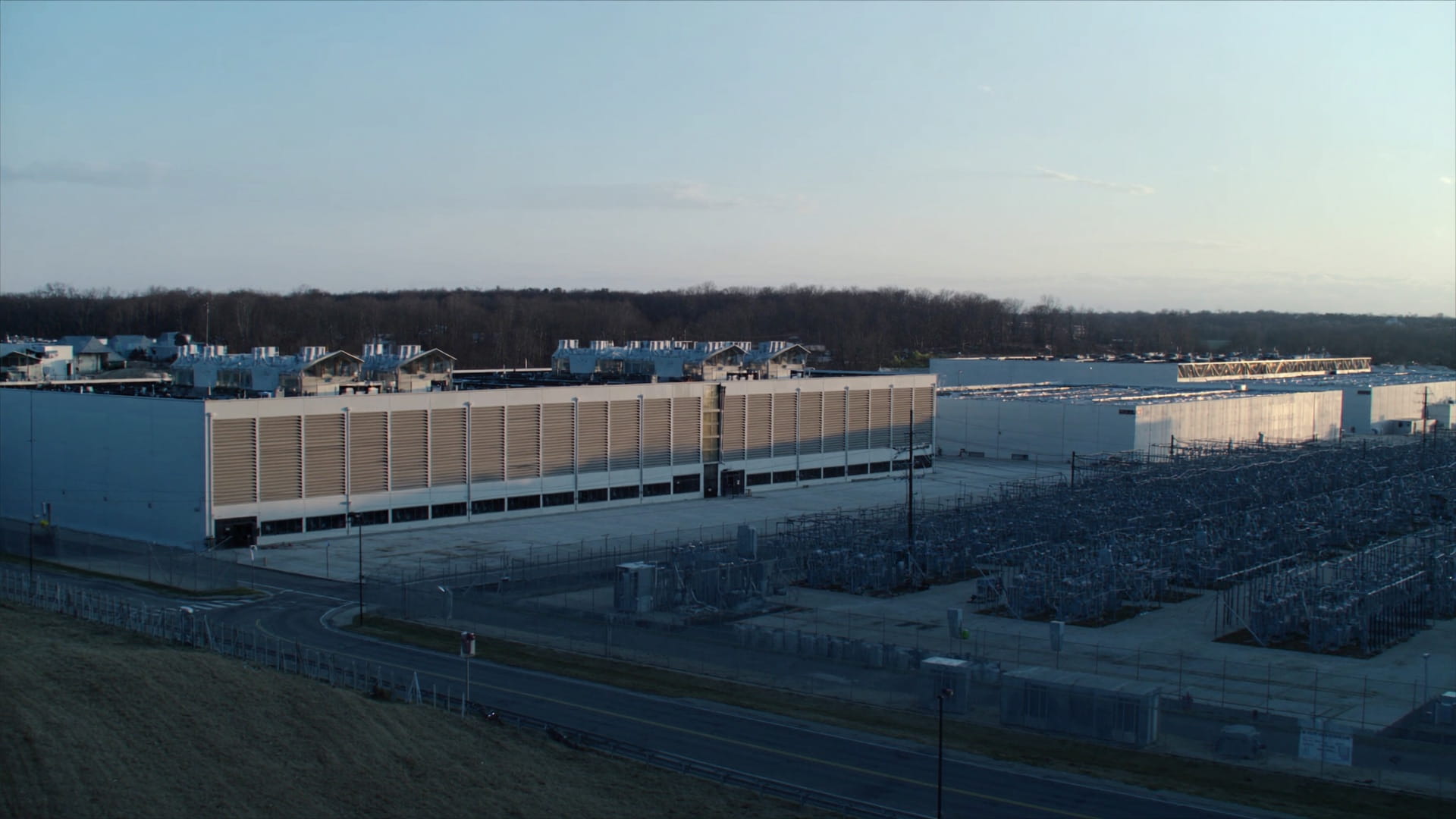
DataCenters
Five nines is the entry fee, not the target. We engineer the layer between the utility and your white space: the one that decides whether a grid event becomes an incident.
- UPS scale
- 50 kW – 22.5 MW
- Connection
- LV to 25 kV
- Deployment
- Indoor or containerized
- Support
- 24/7 monitoring
The rack is protected. The chiller is not.
Distributed rack-level UPS is now standard, and it does its job. What it does not do is protect the mechanical plant (chillers, CRAC units, pumps, controls) that determines how long the IT load survives after a supply event. A facility can lose cooling and stay powered, and it will still go down; it just takes longer and does more damage.
Centralized protection at the service entrance closes that gap. A medium-voltage UPS sitting on the 5–25 kV intake protects everything downstream, including the plant that keeps the room within temperature. At 2.25 to 22.5 MW, that is whole-hall or whole-campus coverage from one asset rather than dozens.
Power quality is the second half of the problem. Data centers run large non-linear loads and pay for reactive power on intake tariffs where electricity is typically around half of total operating cost. Automatically switched compensation at the intake substation delivers fine-grained group correction from a small footprint, and pays for itself against the tariff rather than against a downtime risk model.
What actually causes the incident
Mechanical plant left unprotected
IT load rides through on rack UPS while cooling drops. Thermal runaway follows within minutes in a high-density hall, and the recovery is far worse than a clean shutdown.
Utility events below outage threshold
Voltage sags too short to register as an outage still trip variable speed drives on chillers and pumps. The utility record shows a clean supply; the site shows a load loss.
Reactive power on the intake tariff
At half of operating cost, electricity charges dominate. Poor power factor at a 110/220 kV intake substation converts directly into penalty charges that no amount of PUE tuning recovers.
Harmonic distortion from non-linear load
Rectifier front ends across thousands of power supplies distort the supply waveform, heating transformers and neutrals and eroding the margin that was designed in.
No space for the solution
By the time a power quality problem is understood, the electrical rooms are full. Outdoor-rated containerized systems are frequently the only deployable answer.
Commissioning risk at energization
New capacity is energized against a schedule that has already slipped. Without disciplined FAT and SAT, latent defects are discovered by production load.
The stack for this sector.
Each of these is a full solution page. The note explains how it is typically applied here.
UPS Systems
Medium-voltage PureWave UPS to 22.5 MW at the intake, or modular LV UPS to 4.8 MW for hall-level protection.
STATCOM & SVG
Fast dynamic compensation where load steps and generator transitions move faster than switched plant can follow.
BESS
Demand charge management, capacity deferral, and grid services on sites where the connection is the constraint.
Monitoring & Support
Estate-wide asset health across multiple halls and sites, feeding your existing DCIM rather than a separate silo.
Field Services
FAT and SAT before energization, then scheduled maintenance that fits inside your change control windows.
Numbers that matter in this sector.
Work we have done here.
- Containerized UPS lineups delivered and commissioned for US technology and colocation sites
- Container lift-and-set installations completed on live campuses without shutting down adjacent load
- Legacy PureWave UPS fleets kept in service with spares, refurbishment and scheduled maintenance
- Intake-level power factor correction engineered against published tariff penalty thresholds
Questions from this sector.
- Why medium-voltage UPS instead of more LV units?
- Because the protection boundary moves. An MV UPS on the 5–25 kV intake protects everything downstream, mechanical plant included, from one asset, and avoids the conversion losses and floor space of stepping the whole load down first. Below a few megawatts, LV modular is usually the better economics; above it, MV wins.
- Can you deploy without taking the site down?
- In most cases yes. Containerized systems are factory-tested, craned into position and tied in during a planned window. We plan the switching sequence and the fallback with your operations team before anything is energized.
- Do you work to our change control process?
- Yes. Maintenance and commissioning work in live data centers is scheduled inside your change windows, with method statements and risk assessments issued in advance for approval.
We also work in these.
Industrial & Manufacturing
Power quality engineering for production lines where a one-cycle disturbance costs a shift: semiconductor, battery, automotive, pharma and food.
Read moreUtilities & Grid
Voltage support, reactive compensation and grid-forming storage for substations at 220 kV and below, deployed where reinforcement is years away.
Read moreRenewables & Storage
Compliance, compensation and storage for wind, solar and BESS projects, from the G99 study pack through to the containerized asset in the substation yard.
Read moreOil & Gas
Ruggedized, containerized power systems for upstream, midstream and offshore operations where an outage is measured in production days.
Read moreWater & Wastewater
Pumping and treatment sites are energy-intensive, motor-heavy and cannot stop. A natural fit for compensation, storage and private wire supply.
Read moreMining & Metals
Rolling mills, crushers, hoists and furnaces are the most disruptive loads on any network, and the ones compensation was invented for.
Read moreTell us what keeps tripping.
Most conversations start with an event nobody can fully explain. Send us the alarm log, the single-line diagram, or just the symptom. We will tell you what we would measure first.
Let's Solve Your Power Challenge.
Connect with our engineering team for a technical consultation. We'll help you identify risks and uncover efficiency opportunities.

Renewable Energy & Drives
5325 S Moorland RdNew Berlin, WI 53151United States

Severn Drives & Energy
Units 2 & 3, Kingsley Business ParkNew Road, Kibworth BeauchampLeicestershire, LE8 0LEUnited Kingdom
Start Your Consultation
Fill out the form below and we'll be in touch.