Quick answer
Kokam battery modules are no longer supported: SolarEdge, which acquired Kokam in 2018, closed its energy storage division in a wind-down completed in 2025. Owners of Kokam-based UPS and storage systems can usually replace the battery modules without replacing the whole system. A compatible replacement has to match the original electrical specification, integrate with battery management, fit the existing racks, and be verified by testing. We have sourced and confirmed a working replacement.
Key takeaways
- Kokam's manufacturer support ended when SolarEdge closed its energy storage division (announced November 2024).
- Batteries usually reach end of life before the power electronics do; replacing modules beats replacing the system.
- Record part numbers, archive documentation, and baseline battery capacity now, before a failure forces the timeline.
If you have Kokam battery modules in your UPS or energy storage system, you have probably already made the unpleasant discovery. The manufacturer is gone. There are no spares, no engineering support, and barely any documentation left online.
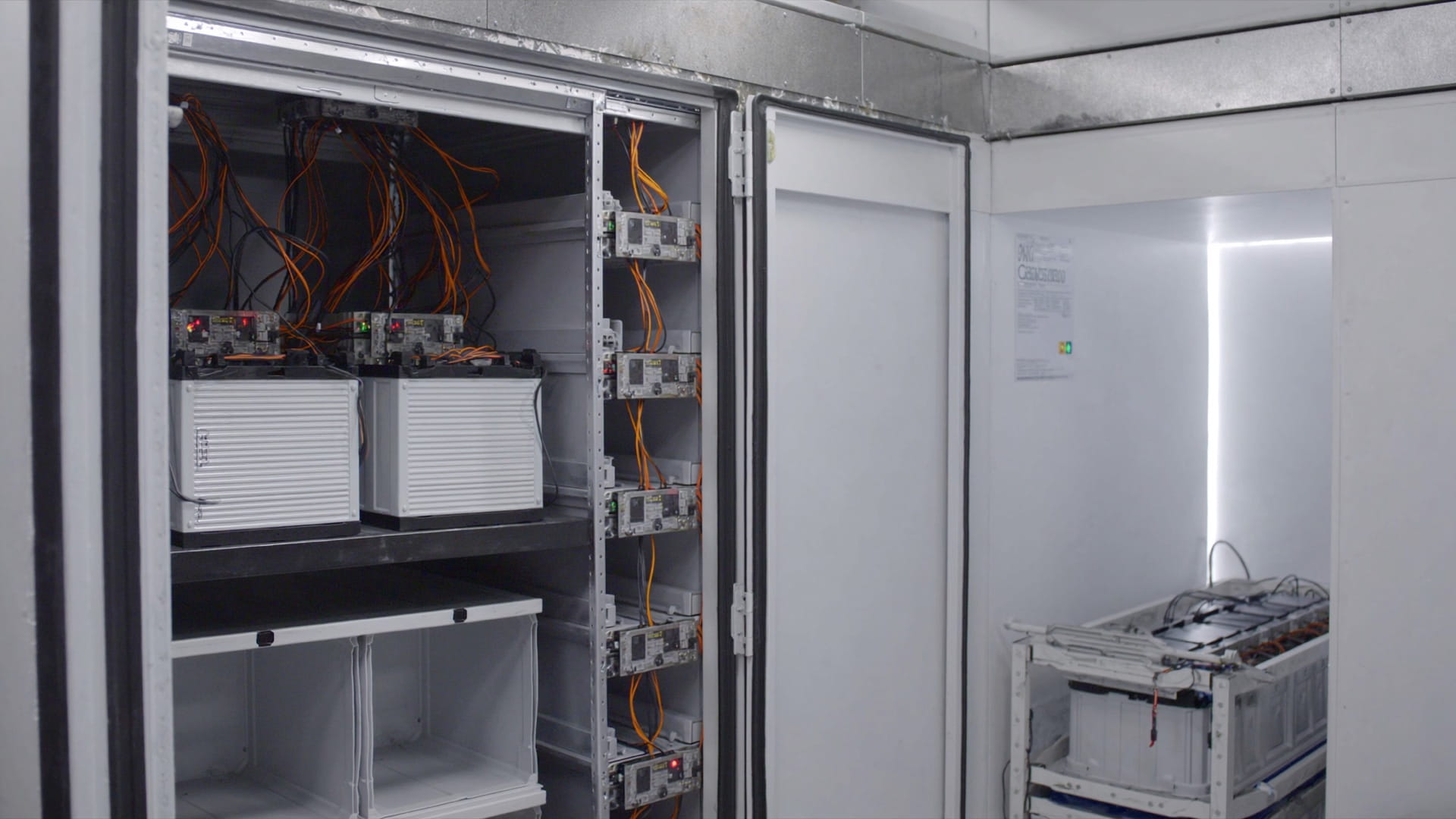
We know because we went through the same search. One of our customers runs Kokam modules in a critical power system, and when the time came to source replacements, we found almost nothing. No supplier lists, no cross-reference guides, no vendor claiming compatibility. This post is the resource we wished existed at the time. It covers what happened to Kokam, why replacement is harder than swapping in a battery with the same voltage, and how we sourced and verified a module that works.
What happened to Kokam?
Kokam was a South Korean battery manufacturer, founded in 1989, that built lithium-ion cells and modules for energy storage, UPS, marine, aerospace, and EV applications in more than 50 countries. Its modules ended up inside a lot of critical power installations, often under other companies' product names.
In October 2018, SolarEdge acquired a majority stake in Kokam and later folded it into its energy storage division. In November 2024, SolarEdge announced it was closing that division entirely to refocus on its core solar business. The wind-down ran through the first half of 2025 and affected around 500 employees, most of them in Korea.
For owners of installed Kokam systems, the practical result is blunt. The product line is obsolete, the support organization no longer exists, and the technical documentation is quietly disappearing from the web.
Why this strands otherwise healthy systems
Lithium battery modules age on their own schedule, regardless of what happens to their manufacturer. Capacity fades, cells drift apart, and a module that tests fine today will need replacement within a planning horizon you can roughly predict.
Normally that is routine maintenance: you order the same module and swap it. When the manufacturer disappears, the same event becomes a project. And because the batteries sit inside a UPS or storage system that protects a larger operation, the temptation is to solve the problem by replacing the entire system. That is usually the most expensive answer available, and in our experience it is rarely the necessary one. The power electronics, the cabinets, the switchgear, and the controls are often perfectly serviceable. Only the batteries are at end of life.
What a real replacement requires
A compatible replacement module has to line up with the original on several fronts at once, and the datasheet only gets you halfway.
Electrical characteristics. Voltage window, capacity, and discharge rating need to match what the system was designed around, including how the original cells behaved under load rather than just the numbers on the datasheet.
Battery management integration. The module has to talk to the existing battery management and monitoring arrangement, or the replacement plan has to include a management layer that does. This is where most "equivalent" batteries fail in practice.
Physical fit. Form factor, weight, terminal layout, and cooling all have to work in the existing racks and enclosures, because the whole point is to avoid rebuilding the system around the battery.
Verification. Paper compatibility is a hypothesis. It has to be proven by testing the candidate module against the original specification before it goes anywhere near a live system.
How we qualified a replacement
Because we could not find an off-the-shelf answer, we built one. We worked through the original system specifications, identified candidate modules from current manufacturers, and tested against the legacy Kokam spec. We have now received replacement hardware, confirmed we have a working replacement, and are setting up the first installation with it.
That work also produced something we did not have before: a documented path from "obsolete Kokam module" to "supported, current-production battery" that keeps the rest of the system in service. Replacing the batteries instead of the whole system is consistent with how we approach most end-of-life problems. Repair and refurbishment come first, and full replacement has to earn its place with data.
If you are running Kokam modules today
A few things are worth doing now, before a failure forces the timeline:
- Find out what you actually have. Record module part numbers, date codes, and firmware or BMS details while the labels and menus are still readable.
- Save every document you can find. Manuals, datasheets, and commissioning records for discontinued products have a habit of vanishing. Archive them.
- Test, and establish a baseline. Capacity testing tells you how much life is left and turns the replacement decision into a scheduled project instead of an emergency.
- Plan the replacement before you need it. Qualifying a compatible module takes time. Starting after a failure means running your critical load with degraded protection while the engineering catches up.
Our field services team handles this kind of work on site, including on-site power electronics rebuilds where the surrounding hardware needs attention too. If you want the background on why battery health matters so much in these systems, our earlier posts on what a UPS actually protects and layering BESS and UPS protection cover it.
Running a system with obsolete battery modules? Send us the module part number and a photo of the nameplate and we will tell you what can be replaced and tested. Email sales@renewable-d.com or call +1 414 562 6559 (US) or +44 116 279 6131 (UK).
Frequently asked questions
Are Kokam batteries still supported?
No. SolarEdge, which acquired Kokam in 2018, announced the closure of its energy storage division in November 2024, and the wind-down completed in 2025. There is no manufacturer support left for legacy Kokam modules. Support now means working with an engineering firm that can qualify compatible replacements.
Can I replace Kokam modules without replacing the whole UPS or storage system?
In most cases, yes. The batteries usually reach end of life long before the power electronics do. A qualified replacement module that matches the original electrical spec, integrates with battery management, and fits the existing racks lets you keep the rest of the system in service.
What should I check before buying replacement modules for a Kokam system?
Match the electrical characteristics (voltage window, capacity, discharge rating), confirm battery management compatibility, check the physical fit in the existing racks and cooling arrangement, and insist on test results against the original specification rather than datasheet equivalence alone.
Tags
Working on a project like this?
Talk to our engineering team about your site, your grid connection or your power quality problem.
Get in touch